 StylBar ConnexionJoin StylBar

Last Updated: November 4, 2026
Quick Summary
24/7 online booking captures clients at peak intent, whenever they decide to book, so you wake up to a filled calendar instead of a voicemail queue. It removes your schedule as the biggest source of booking friction and keeps your chair bookable around the clock.
- Clients book during commutes, lunch breaks and late nights, so availability no longer limits when appointments are made.
- Self-service rescheduling without a phone call lowers the emotional cost of changing plans and reduces silent no-shows.
- Choose a system with bidirectional calendar sync, automated reminders, granular availability controls and deposit collection.
- Set a clear cancellation window, require deposits on longer services and cap how far ahead clients can book.
- Revisit your time-saved versus software-cost numbers after 60 days with real data rather than vendor claims.
Table of Contents
- Why 24/7 Online Booking Fills More Chairs
- The Advantages of Online Booking for Customers
- What to Look for in an Online Booking System for Salons
- The Disadvantages of Online Booking and How to Handle Them
- Why 24/7 Online Booking Fills More Chairs
- Frequently Asked Questions
Why 24/7 Online Booking Fills More Chairs
The benefits of 24/7 online booking start with a simple fact: your chair earns nothing while it sits empty and you're asleep. A client who decides at 11pm that she wants a fresh cut on Saturday doesn't wait until you open. If your button isn't live, she books with someone else's.
Round-the-clock availability removes the biggest source of booking friction: your schedule. Clients book during commutes, lunch breaks and late nights. You wake up to a filled calendar instead of a voicemail queue.
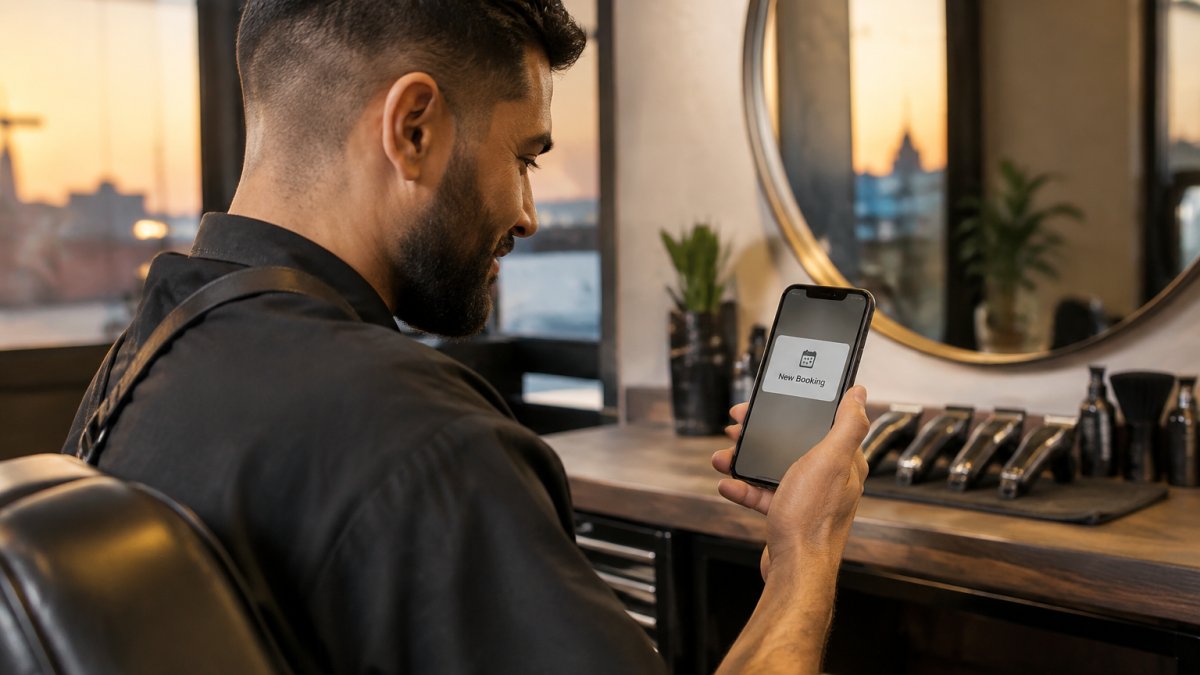
The Advantages of Online Booking for Customers
The advantages of online booking for customers come down to control. Real-time availability, self-selected slots, and instant confirmation eliminate waiting for a reply, double-booked times, and uncertainty about price or service length.
The strongest customer-side advantage is impulse booking. A client who decides at 10:47pm that she wants a Saturday cut is at peak intent. If your booking link is live, you capture that intent before it decays; if not, she books with whoever answers first in the morning.
Self-service also reduces miscommunication because the service, duration, price, and cancellation policy are confirmed up front in the same flow. Clients can reschedule without a phone call, which lowers the emotional cost of changing plans and reduces silent no-shows. The trade-off: publish clear policies inside the booking flow, or self-service becomes self-serve chaos.
If most of your clients find you on social media, turn Instagram followers into bookings with a bio link that converts.
What to Look for in an Online Booking System for Salons
A good online booking system for salons does four things well: real-time synchronization, automated reminders, granular availability controls, and deposit collection. But the features that separate a system you keep from one you abandon are the ones most listicles skip: integration with your existing tech stack, security and privacy compliance, and a clear path to measuring return on investment.
Integration with your existing stack. Your booking tool should sync both ways with the calendars your team already uses, push client records into your CRM, and reconcile payments with your accounting software. A one-way calendar feed still lets double-bookings happen when a stylist blocks time in the salon's shared calendar. Ask whether the sync is bidirectional, how often it refreshes, and what happens when two people book the same slot within seconds. If client history and notes live in one system and bookings in another, you'll spend your admin time copying data instead of serving clients.
Security and data privacy. Online booking collects names, phone numbers, email addresses, and sometimes payment details, making the booking page a data-handling surface whether you think of it that way or not. Look for encrypted transmission, role-based staff access, a documented data-retention policy, and a clear answer on where data is stored. A vendor that cannot explain its compliance posture in plain language will cost you more in risk than it saves in admin time.
A framework for measuring ROI. Before you sign, estimate time saved versus software cost. Count the hours per week you and your staff spend on booking-related calls, texts, and rescheduling; multiply by your loaded hourly cost; add revenue from appointments lost to after-hours inquiries; then subtract the monthly software cost and setup time. Revisit the numbers after 60 days with real data rather than vendor claims.
- Calendar integration that prevents double-bookings across shared suites, with bidirectional sync
- Automated notifications by text and email, sent on your schedule
- Cancellation policy enforcement built into the booking flow
- Payment processing so deposits land before the appointment
- Client self-service for rescheduling without a phone call
- CRM and accounting sync so records and payments reconcile without manual entry
- Documented security and privacy controls appropriate to your jurisdiction and industry
Watch out: skip the availability controls and you'll get bookings at hours you never intended to work; skip the integration and security questions and you'll get a system that creates more admin work than it removes.
Here are the core features to check before you commit to a booking system.
| Feature | What it should do |
|---|---|
| Calendar integration | Bidirectional sync that prevents double-bookings across shared suites |
| Automated notifications | Text and email reminders sent on your schedule |
| Cancellation policy | Enforcement built into the booking flow |
| Payment processing | Deposits land before the appointment |
| Client self-service | Rescheduling without a phone call |
| CRM and accounting sync | Records and payments reconcile without manual entry |
| Security and privacy | Documented controls appropriate to your jurisdiction and industry |
The Disadvantages of Online Booking and How to Handle Them
The disadvantages of online booking are real. No-shows still happen, some clients book impulsively and cancel, and a poorly configured system can flood your calendar with requests you'd rather decline.
The fix is policy, not panic. Set a clear cancellation window, require deposits on longer services, and cap how far ahead clients can book. If no-shows are already costing you, learn how to handle client no-shows without losing revenue with a step-by-step response workflow and text templates.
Why 24/7 Online Booking Fills More Chairs
Every hour your booking link is live is an hour you can capture a client who would otherwise have drifted to a competitor. StylBar Connexion keeps your chair bookable around the clock, turns every portfolio post into a booking opportunity, and runs your entire business from one place.
Get started with StylBar Connexion and stop losing bookings to closed doors.
Frequently Asked Questions
What are the benefits of online bookings for a solo stylist?
The biggest gains are time and reach. Clients book themselves at any hour, so you stop trading texts during appointments and stop losing after-hours enquiries to voicemail. Booking requests are captured in one place instead of scattered across DMs and your personal calendar. For a solo operator, that means fewer admin hours each week and more slots actually filled.
How does 24/7 online booking help a salon get more appointments?
Most booking decisions happen outside working hours, when clients are commuting, scrolling social media, or planning their week. A 24/7 online booking page captures those moments instantly, with no phone tag and no waiting for a reply. Real-time synchronisation also prevents double-bookings, so the slots you show are genuinely open.
What are the downsides of online booking systems?
Common drawbacks include a learning curve during setup, the cost of the software, and the risk of clients booking slots you did not intend to offer. Some clients still prefer to message or call. You also need reliable availability controls, buffer times, and deposit rules so late-night bookings do not wreck your schedule. Most of these are solved by configuring your availability properly before you go live.
